
Skijoring with Dogs: A Closer Look at Power, Endurance and Purpose
- Feb 2
- 4 min read

Skijoring is often perceived as a fast and spectacular winter sport. Dogs pulling skiers through snowy landscapes, visible excitement, high energy.
But when you look at skijoring through the lens of canine fitness, a very different picture emerges.
Skijoring is not primarily about speed. It is about controlled power, sustainable endurance and purposeful movement.
Especially for working breeds like Huskies, skijoring is not a trend activity. It is a form of functional winter training that aligns closely with how their bodies and minds are designed to work.
This article takes a dog first look at skijoring. Not as a race format, but as a canine sport with real physical and mental demands.
Skijoring is an Endurance Sport First
One of the most common misconceptions is that skijoring is a high speed discipline.
While competitive skijoring can involve short bursts of speed, the vast majority of skijoring sessions worldwide are endurance based.
For the dog, skijoring typically means:
steady forward movement
moderate intensity over time
consistent pulling effort
active cooperation with the human
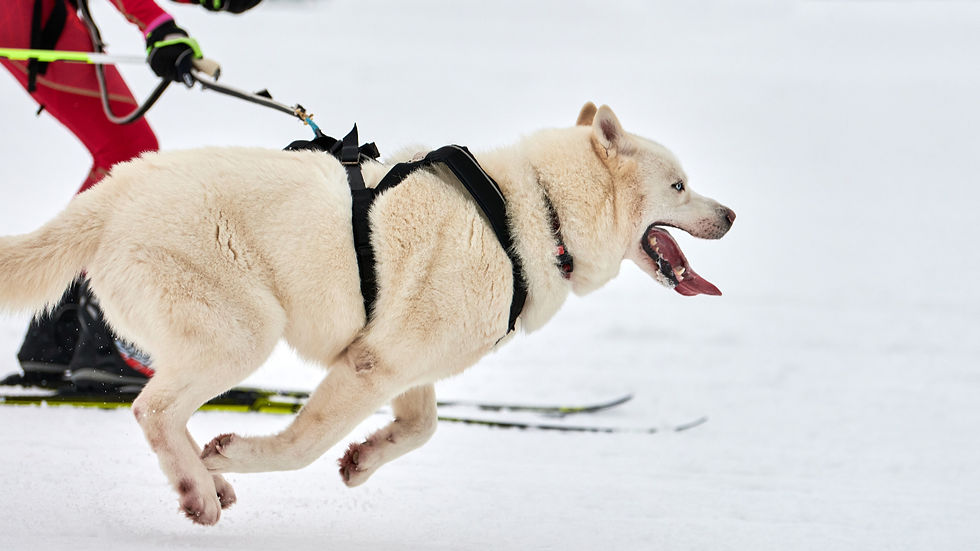
The dominant gait is usually a strong, efficient trot or a controlled gallop.
Speed is not the goal. It is the result of good conditioning and movement efficiency.
From a training perspective, skijoring challenges the aerobic system far more than sprint capacity. Dogs that lack endurance struggle not because they are slow, but because they fatigue early and lose movement quality.
Power Comes from Strength and Stability
Pulling does not automatically equal strength.
Effective skijoring power comes from:
well developed hindquarter strength
core stability under load
controlled shoulder movement
efficient force transfer through the body
Dogs that lack foundational strength compensate.
Compensation leads to inefficient movement.
Inefficient movement leads to overload.
This is why off snow conditioning matters.
Strength work that improves body awareness, joint stability and controlled force production is essential for skijoring dogs.
For Huskies in particular, strength training supports their endurance based build. It allows them to pull efficiently, not forcefully, preserving long term soundness.
Endurance is More Than Cardio
Endurance in skijoring is not limited to the cardiovascular system.
It includes:
muscular endurance
postural endurance
mental endurance
A skijoring dog must maintain movement quality even as fatigue builds.Snow conditions change. Terrain varies. Focus must remain.
This is where many teams struggle. Not because the dog is unfit, but because training lacks structure.
Endurance is built through consistency, not intensity.
Gradual distance increases, adequate recovery and seasonal planning create far more resilient dogs than occasional high effort sessions.
Purpose Drives Performance
Skijoring works because dogs choose to engage.
Unlike many other sports, there is no mechanical control. No reins. No direct pressure.
The dog moves forward because it understands the task and finds value in it.
This sense of purpose is especially important for working breeds.
Huskies thrive when movement has meaning.
Skijoring provides:
a clear forward task
rhythmic, sustained effort
mental engagement through commands and terrain
a true partnership with the human
A dog that understands its role runs calmly and efficiently.
A dog driven only by excitement burns out quickly.
Purpose creates sustainability. Motivation alone does not.
Equipment Shapes Health and Movement
From a canine fitness perspective, equipment is not a detail. It directly affects biomechanics.
A properly fitted pulling harness allows:
free shoulder movement
unobstructed breathing
even load distribution
correct hindquarter engagement
Poorly fitted or unsuitable harnesses force dogs into inefficient movement patterns. Over time, this affects joints, muscles and connective tissue.
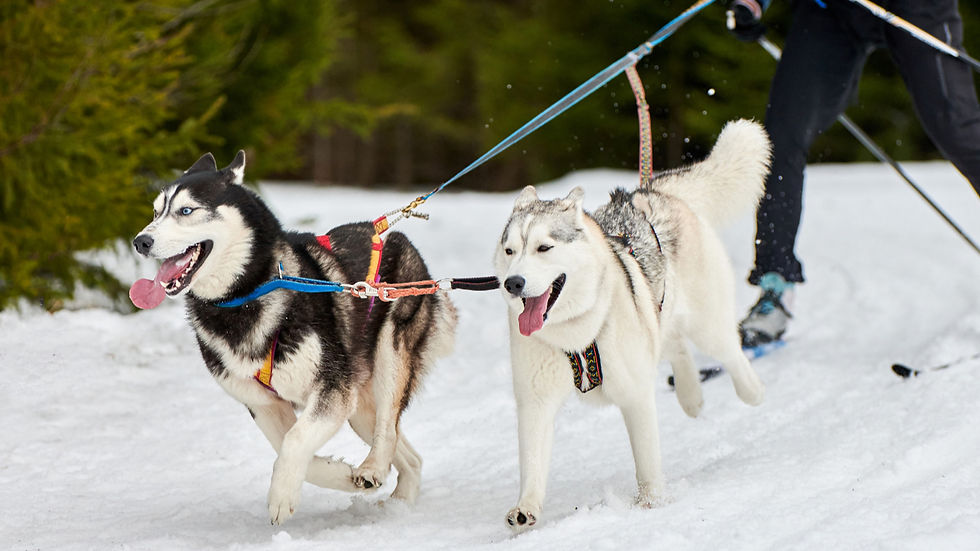
The same applies to the tow line.Shock absorption is essential to protect the spine from sudden load changes.
Good equipment does not replace training. But bad equipment can undermine even the best conditioned dog.
Which Dogs Benefit Most from Skijoring
Skijoring is not suitable for every dog.
From a health and fitness standpoint, it requires:
full skeletal maturity
healthy joints and spine
a basic aerobic base
willingness to pull forward
mental stability in dynamic environments
It is particularly well suited for:
Huskies and other northern breeds
endurance oriented working dogs
active dogs that enjoy structured movement
It is less appropriate for dogs with chronic orthopedic issues, poor movement control or low stress tolerance.
Skijoring should never test how much a dog can pull. It should reflect how well prepared the dog is.
Purpose Comes from the Right Foundations
Skijoring is not about speed. It is about how power and endurance are supported over time.
When training, conditioning and equipment work together, dogs can move freely, efficiently and with purpose. When one element is missing, compensation follows.
That is why harness fit matters. It is the direct connection between the dog’s body and the task. If it restricts movement, even the best training loses its effect.
If you want to take a closer look at correct harness fitting, my guide“Fits like a Glove” breaks down what really matters for active and working dogs.
And if you feel your dog’s training would benefit from more structure or individual guidance, this is exactly where personal training can make a difference.
Not to do more.
But to do things right.


Comments