
Forged by Frost – Why Huskies Thrive in the Cold

When temperatures drop and we start layering up, many Huskies seem to do the opposite. They slow down indoors, press their noses against the window, and wait for the cold to finally arrive.
While humans associate winter with discomfort, Huskies and other sled dogs often come alive when temperatures fall below freezing. Snow, frost, and icy air are not obstacles for them. They are familiar ground.
Why does cold feel natural to Huskies, while it stresses most other dogs?
The answer lies in physiology, thermoregulation, and a metabolism shaped by generations of life and work in cold environments. Understanding this difference matters not only for daily care, but also for training decisions and long-term health.
Cold Is Not the Enemy for Huskies
Cold itself is not automatically harmful. What matters is cold stress, not temperature alone.
Cold stress occurs when a dog can no longer maintain its core body temperature without excessive energy loss. For many breeds, this happens quickly once temperatures drop. For Huskies, that threshold is significantly lower.
As sled dogs, Huskies evolved in Arctic and subarctic regions where low temperatures were a constant rather than an exception. Their bodies are designed to function efficiently in cold conditions. This means that cold exposure does not automatically trigger stress responses in a healthy, acclimated Husky.
Cold is not the problem. Loss of thermoregulation is.
Built for Winter - The Physical Adaptations of Huskies
One of the most visible adaptations is the Husky’s double coat.

Huskies have a dense undercoat that traps warm air close to the skin and a longer outer coat that protects against wind and moisture. This system works through insulation created by air rather than fur length alone.
The coat performs best in dry cold conditions, which explains why Huskies tolerate freezing temperatures far better than wet winter weather.
An important detail often overlooked is that moisture is far more dangerous than cold itself. Once water penetrates the insulating air layer, heat loss increases rapidly. Rain, melting snow, and damp fur challenge even the most cold adapted dogs.
Seasonal coat changes further enhance insulation. As daylight decreases, Huskies naturally develop a thicker undercoat, improving thermal efficiency without additional energy cost.
Thermoregulation - How Huskies Control Body Heat
At the core of a Husky’s cold tolerance lies its ability to regulate body temperature precisely.
Thermoregulation refers to the physiological processes that keep core temperature stable despite environmental changes. In Huskies, this system is exceptionally efficient.
A key mechanism is the countercurrent heat exchange in the legs and paws. Warm arterial blood transfers heat to colder venous blood before it returns to the body. This allows the paws to remain functional on snow and ice while minimizing overall heat loss.

In addition, Huskies use vasoconstriction to reduce blood flow to peripheral areas when necessary, preserving warmth for vital organs without damaging tissue. This is why paws and ears may feel cold to the touch while core temperature remains stable.
Together, these mechanisms allow Huskies to stand, move, and rest on snow without significant heat loss, something very few breeds can do safely.
Metabolism in the Cold - Why Huskies Need Less Than You Think
Cold environments usually increase energy demands. Huskies respond differently.

Sled dogs are known for an extremely efficient fat based metabolism. Instead of relying primarily on glycogen, their bodies prioritise fat oxidation, which produces both energy and heat.
This metabolic strategy allows Huskies to:
sustain endurance in cold weather
generate heat without excessive muscle fatigue
remain physically capable with relatively low energy input
Research on sled dogs shows that even under extreme workloads and cold exposure, their metabolism adapts to preserve muscle while maintaining performance. This efficiency explains why Huskies often appear almost unaffected by conditions that would exhaust other dogs.
When Cold Becomes a Problem
Despite their adaptations, Huskies are not immune to cold stress.
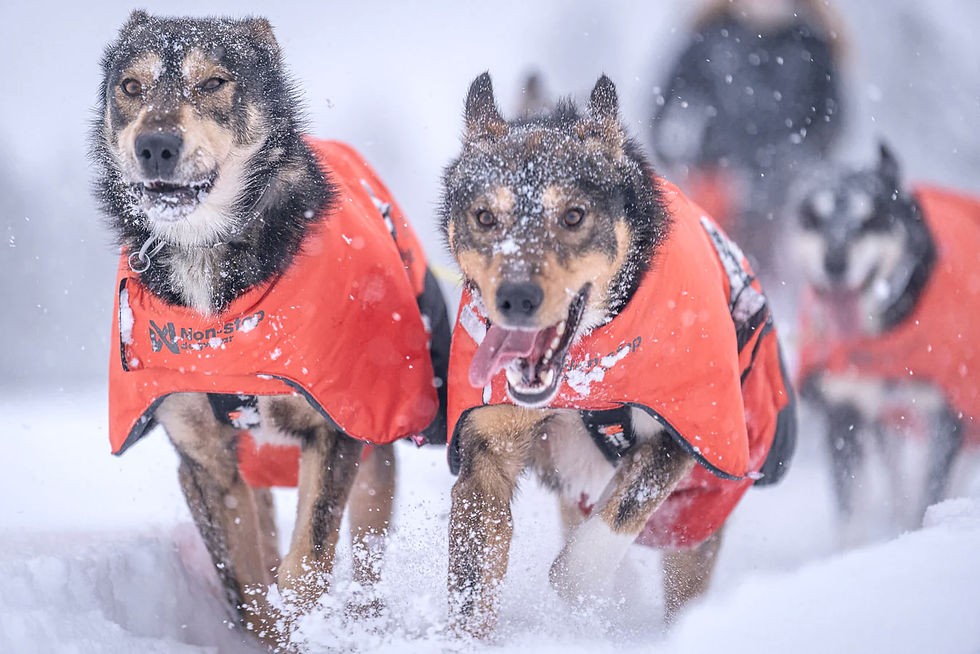
Problems arise when environmental factors overwhelm their natural defences, such as prolonged exposure to wet conditions, strong wind combined with fatigue, insufficient energy intake, or lack of acclimatisation.
Warning signs include persistent shivering, stiffness or reluctance to move, behavioural changes, withdrawal, or unusual lethargy.
Cold tolerance always depends on the individual dog. Age, health status, conditioning, and recovery all influence how well a Husky copes with winter conditions.
What This Means for Training and Daily Life
For cold adapted breeds like Huskies, lower temperatures often support performance rather than limit it.
When thermoregulation functions efficiently and metabolism relies on fat based energy systems, cold air becomes less of a threat and more of a stabilizing factor. Many Huskies demonstrate improved focus, steady endurance, and a greater willingness to work in colder conditions.
This does not mean winter training should automatically intensify. It means that temperature alone should not dictate activity levels.
More relevant than the number on the thermometer is:
whether the coat stays dry
whether energy intake matches workload
whether recovery is respected
whether conditioning level supports the task
Cold air supports performance. Wet exposure and unmanaged fatigue undermine it.
Understanding the physiological response of Huskies to winter allows training decisions to be guided by biology rather than assumption.
Winter Is Not the Test
Cold is not a challenge Huskies need to overcome. It is an environment they are built to function in.

Their coat, circulation, metabolism, and thermoregulation work together to make winter a natural state rather than an extreme condition. When we understand this, we stop trying to protect Huskies from the cold and start learning how to work with it intelligently.
Winter does not challenge a Husky’s nature. It aligns with it.


Comments